
Making elections truly inclusive requires more than guaranteeing the right to vote. It means ensuring that every eligible voter, regardless of their physical, sensory or cognitive abilities, can participate independently and without unnecessary barriers.
According to the World Health Organization, approximately 16% of the global population lives with a disability. Ensuring their participation requires accessible information, inclusive processes, trained election personnel and technology designed around voters’ needs.
These challenges were at the center of Inclusive Elections: Ensuring the Right to Vote for All, a webinar organized by the International Centre for Parliamentary Studies (ICPS). Experts from the International Foundation for Electoral Systems (IFES), Center for Civic Design, Sightsavers, Inclusion Europe and Smartmatic shared practical approaches to removing barriers and making elections more accessible.
How Universal Design and Technology Can Remove Voting Barriers
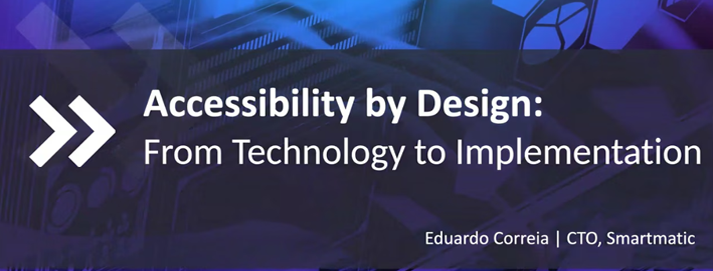
Eduardo Correia, Chief Technology Officer of Smartmatic, emphasized that accessibility must be considered from “day zero” of product development and treated as a fundamental measure of election quality.
He explained that directing voters with disabilities to separate equipment can unintentionally discourage participation. Universal design offers a different approach: technology that accommodates a broad range of abilities while providing everyone with a consistent and inclusive voting experience.
Whitney Quesenbery of the Center for Civic Design highlighted Los Angeles County’s Voting Solutions for All People (VSAP) initiative as an example of universal design in practice. Developed through extensive community consultations and usability testing, the initiative introduced a voting experience designed to accommodate the county’s diverse electorate. “That meant that everybody had an accessible voting system,” Quesenbery explained.
Building on this example, Correia explained how Smartmatic’s work with Los Angeles County informed its VVSG 2.0-certified voting solution, which applies similar universal design principles.
Correia also emphasized that accessibility must go hand in hand with security, privacy, transparency and usability, extending beyond voters to the poll workers responsible for operating election equipment.
Inclusion Goes Beyond the Voting Machine
A recurring message throughout the webinar was that accessibility must extend across the entire electoral cycle, from voter registration and education to polling station preparation and Election Day operations.
Virginia Atkinson of IFES emphasized the importance of accessible election planning and technology procurement. Colleen Roberts of Sightsavers called for stronger collaboration with organizations representing people with disabilities, measurable accessibility standards and better poll worker training.
Meanwhile, Inge Volleberg of Inclusion Europe highlighted the importance of accessible information and supported decision-making to protect the voting rights and independence of people with intellectual disabilities.
Together, these perspectives reinforced an important principle: technology can remove barriers, but its effectiveness depends on the policies, people and processes surrounding it.
Making Accessibility a Standard, Not an Exception
The webinar underscored the importance of collaboration between election authorities, technology providers, researchers and people with disabilities. Participants emphasized the need for continued research, usability testing, stronger accessibility standards and meaningful engagement with voters throughout the design process.
Ultimately, making elections more inclusive means treating accessibility as a fundamental requirement rather than an optional feature, ensuring that every eligible voter has a meaningful opportunity to participate with dignity, independence and confidence.
Watch Eduardo Correia’s presentation: Accessibility in Election Technology Design